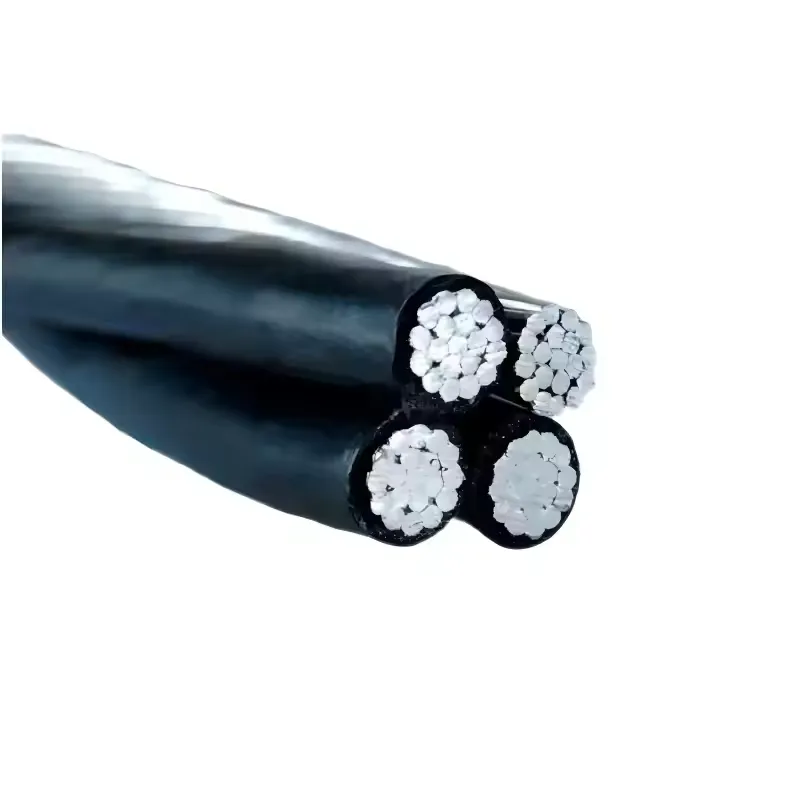
 Likewise, any conductor or cable will decide up energy from any existing electromagnetic area around it. These results are sometimes undesirable, in the primary case amounting to undesirable transmission of vitality which may adversely have an effect on close by gear or different parts of the identical piece of tools; and within the second case, undesirable pickup of noise which may mask the specified sign being carried by the cable, or, if the cable is carrying energy provide or control voltages, pollute them to such an extent as to cause tools malfunction. British Patents Nos. 452,713 or 452,772, the paper sheath 2 being changed if required by the insulating sheath of rubber described in these specs. 4 are connected'to the secondary winding of a transformer having a centre tap which is earthed, as by a connection to the lead sheathing 6, the alerts which it is desired to transmit alongside the cable being applied to the first of the transformer.
 In the popular type of the invention the cable is related to an auxiliary conductor and is so linked as to be efficient in lowering or eliminating interference at frequencies up to 2,000 cycles per second and is provided with lead sheathing or a sheath of equivalent materials for the purl0 pose of lowering or eliminating interference at frequencies above about 50,000 cycles per second, the lead sheathing having utilized to the outer floor thereof tape of mushy iron or different suitable materials to dealwith frequencies between 2,000 and 50,000 cycles'per second. 2,000 cycles per second and is supplied with lead sheathing or a sheath of equivalent material for the purl0 pose of decreasing or eliminating interference at frequencies above about 50,000 cycles per second, the lead sheathing having applied to the outer surface thereof tape of delicate iron or other appropriate materials to dealwith frequencies between 2,000 and 50,000 cycles'per second. This association, nonetheless, is of itself 25 discovered to not be practicable in respect of frequencies better than 2,000 cycles per second.
It should, nevertheless, be understood that numerous forms of circuits possibly 'atl employed together with the cable proven in the drawing. This invention relates to electricl transmission systems and is concerned with the elimination or reduction of interference in cables as a consequence of adjacent cables or any electrical circuits. Cables of this variety are employed for the 10 transmission of television signals and different indicators of very high frequencies and it will likely be appreciated that in view of the big selection of frequencies transmitted, extending from very low frequencies-including direct present, as much as frequenl5 cies of some megacycles, the signals transmitted are liable to interference brought on by adjoining cables or other electric circuits or devices producing interfering signals having a large frequency vary. In response to the principle function of the invention an electric transmission system is supplied comprising a co-axial cable during which, for the aim 55 of reducing or eliminating nterferenceover a wide frequency vary, totally different means are associated with the cable that are effective in decreasing or eliminating interference over different portions of the total frequency vary. One technique of reducing interference in cables of the sort to which the present invention relates requires an auxiliary conductor related to the central conductor to represent a balanced circuit.
Wide frequency range, an auxiliary conductor is wound across the central conductor to kind a balanced circuit for decreasing low frequency interference and additional metallic means surrounding the auxiliary conductor for lowering interference over the upper frequency portion of the full frequency range. If such tape is to be edective at the low frequencies for which it has hitherto often been employed, a substantial thickness is required and the development turns into expensive. 0.01 of an inch and such a thickness is found to be economical and efficient in reducing interference over a spread of about 2,000 to 50,000 cycles per second. 4 is conveniently of about 0.035 of an inch in diameter and this measurement is discovered to be economical in use for providing a balance circuit free from interference up to about 2,000 cycles per second. Shielding makes use of the electrical precept of the Faraday cage. It is also well-known that the addition of iron tape round the lead sheath will increase the shielding. Wire wound round mentioned sheath and connected to the centre conductor by means of an exterior circuit to kind a balanced circuit for lowering low frequency interference, a conducting sheath of lead surrounding the auxiliary conductor and inside sheath for decreasing interference at excessive frequencies, and tape of soft iron utilized externally to the sheath of lead for decreasing interference at frequencies intermediate the mentioned low and high frequencies.
For those who have any concerns relating to wherever as well as the way to employ electric cable, it is possible to email us at our webpage.
 月季树yuejiw.com:探索月季树的魅力与种植技巧
