To facilitate the transition, the Army also established a series of pilot programs and feedback mechanisms to gather input from soldiers on the effectiveness and fairness of the test. This feedback was crucial in refining the max acft score and addressing any concerns raised by soldiers regarding the test's structure and scoring.
While the minimum score serves as a valuable benchmark for physical fitness, it has also introduced challenges that require ongoing attention and adaptation. Ultimately, the goal remains clear: to cultivate a physically fit and capable force ready to meet the demands of modern warfare. As the Army continues to refine the ACFT, it is essential to balance the need for high standards with the support necessary to help all soldiers succeed. The establishment of a minimum score for the ACFT has significantly impacted soldier readiness, morale, and training practices within the Army.
In conclusion, the 2026 ACFT scoring table for male soldiers represents a significant shift in the U.S. By incorporating a broader range of fitness events and establishing performance standards that account for age and gender, the Army aims to enhance soldier readiness and overall effectiveness in combat. As the Army continues to refine the ACFT, it is crucial to maintain a focus on inclusivity and support for all soldiers, ensuring that the test serves as a tool for improvement rather than a barrier to success. Army's approach to physical fitness assessment. While challenges remain in the implementation and acceptance of the ACFT, its potential to foster a culture of fitness, accountability, and teamwork within the ranks is undeniable.
As physical readiness is critical for operational success, utilizing tools like the PT test calculator can make a significant difference in a soldier's preparation and performance during the Army Physical Fitness Test. By understanding how to use the calculator effectively, soldiers can gain insights into their strengths and weaknesses, set realistic training goals, and ultimately improve their overall fitness levels. The Army PT test calculator is an invaluable resource for soldiers aiming to enhance their physical fitness and performance on the APFT.
Errors in data entry could lead to misleading scores, which may hinder a soldier's training progression. Additionally, the accuracy of the calculator relies heavily on the soldier's ability to accurately input their performance data. To mitigate these risks, the Army emphasizes the importance of proper training in using the calculator and understanding the ACFT scoring system.
For the push-ups and sit-ups, input the total number completed. For the two-mile run, input the total time taken in minutes and seconds. Input Data into the Calculator: Enter the raw scores into the respective fields of the calculator.
In the current system, soldiers earn points based on their ACFT scores, with higher scores translating into more promotion points. For instance, soldiers who score in the highest tier (540 and above) can earn up to 100 promotion points, while those in the lower tiers receive fewer points. This scoring system incentivizes soldiers to improve their physical fitness and achieve higher scores on the ACFT.
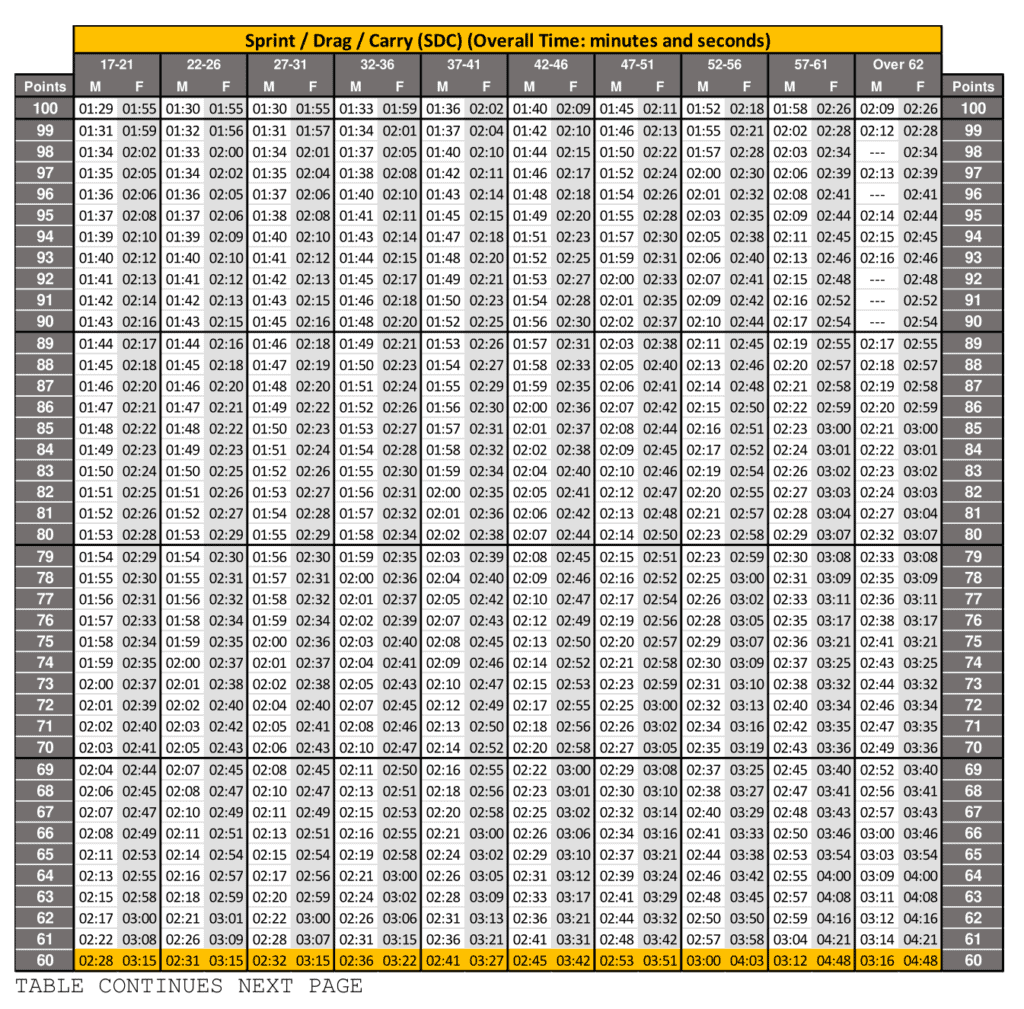
As soldiers age, the point thresholds for these scoring categories adjust, allowing for a fair evaluation of physical fitness. For instance, the scoring table for male soldiers aged 17-21 requires a minimum of 60 points in each event to pass, with a maximum of 100 points available per event. To achieve a Gold score overall, a soldier must accumulate a total of 540 points across all six events. The Silver and Bronze scores require 495 and 420 points, respectively.
 Regular Assessment: Periodically take practice ACFTs to gauge progress and identify areas needing improvement. This practice not only familiarizes soldiers with the test format but also helps reduce anxiety on test day.
 The Army Physical Fitness Test (APFT) is a crucial component of the U.S. Army's assessment of soldier readiness and physical capabilities. This article aims to provide an in-depth overview of the Army PT test calculator, its significance, and how to effectively use it. As part of this evaluation, the PT test calculator serves as a valuable tool for soldiers to estimate their performance and understand the scoring system involved.
This shift has led to an increased emphasis on functional fitness, with training sessions designed to mimic the physical demands soldiers face in combat scenarios. Units have begun to implement more comprehensive physical training programs, focusing on the specific events included in the ACFT. The introduction of the ACFT has necessitated a reevaluation of training regimens across the Army.
The ACFT was created to address this gap by incorporating a more diverse range of exercises that simulate the physical demands of combat. The APFT primarily focused on three events: push-ups, sit-ups, and a two-mile run. The ACFT was developed to replace the Army Physical Fitness Test (APFT), which had been in use since the 1980s. While these exercises provided a basic measure of physical fitness, they did not adequately reflect the physical challenges soldiers face in combat situations.
While the minimum score serves as a valuable benchmark for physical fitness, it has also introduced challenges that require ongoing attention and adaptation. Ultimately, the goal remains clear: to cultivate a physically fit and capable force ready to meet the demands of modern warfare. As the Army continues to refine the ACFT, it is essential to balance the need for high standards with the support necessary to help all soldiers succeed. The establishment of a minimum score for the ACFT has significantly impacted soldier readiness, morale, and training practices within the Army.
In conclusion, the 2026 ACFT scoring table for male soldiers represents a significant shift in the U.S. By incorporating a broader range of fitness events and establishing performance standards that account for age and gender, the Army aims to enhance soldier readiness and overall effectiveness in combat. As the Army continues to refine the ACFT, it is crucial to maintain a focus on inclusivity and support for all soldiers, ensuring that the test serves as a tool for improvement rather than a barrier to success. Army's approach to physical fitness assessment. While challenges remain in the implementation and acceptance of the ACFT, its potential to foster a culture of fitness, accountability, and teamwork within the ranks is undeniable.
As physical readiness is critical for operational success, utilizing tools like the PT test calculator can make a significant difference in a soldier's preparation and performance during the Army Physical Fitness Test. By understanding how to use the calculator effectively, soldiers can gain insights into their strengths and weaknesses, set realistic training goals, and ultimately improve their overall fitness levels. The Army PT test calculator is an invaluable resource for soldiers aiming to enhance their physical fitness and performance on the APFT.
Errors in data entry could lead to misleading scores, which may hinder a soldier's training progression. Additionally, the accuracy of the calculator relies heavily on the soldier's ability to accurately input their performance data. To mitigate these risks, the Army emphasizes the importance of proper training in using the calculator and understanding the ACFT scoring system.
For the push-ups and sit-ups, input the total number completed. For the two-mile run, input the total time taken in minutes and seconds. Input Data into the Calculator: Enter the raw scores into the respective fields of the calculator.
In the current system, soldiers earn points based on their ACFT scores, with higher scores translating into more promotion points. For instance, soldiers who score in the highest tier (540 and above) can earn up to 100 promotion points, while those in the lower tiers receive fewer points. This scoring system incentivizes soldiers to improve their physical fitness and achieve higher scores on the ACFT.
As soldiers age, the point thresholds for these scoring categories adjust, allowing for a fair evaluation of physical fitness. For instance, the scoring table for male soldiers aged 17-21 requires a minimum of 60 points in each event to pass, with a maximum of 100 points available per event. To achieve a Gold score overall, a soldier must accumulate a total of 540 points across all six events. The Silver and Bronze scores require 495 and 420 points, respectively.
Regular Assessment: Periodically take practice ACFTs to gauge progress and identify areas needing improvement. This practice not only familiarizes soldiers with the test format but also helps reduce anxiety on test day.The Army Physical Fitness Test (APFT) is a crucial component of the U.S. Army's assessment of soldier readiness and physical capabilities. This article aims to provide an in-depth overview of the Army PT test calculator, its significance, and how to effectively use it. As part of this evaluation, the PT test calculator serves as a valuable tool for soldiers to estimate their performance and understand the scoring system involved.This shift has led to an increased emphasis on functional fitness, with training sessions designed to mimic the physical demands soldiers face in combat scenarios. Units have begun to implement more comprehensive physical training programs, focusing on the specific events included in the ACFT. The introduction of the ACFT has necessitated a reevaluation of training regimens across the Army.
The ACFT was created to address this gap by incorporating a more diverse range of exercises that simulate the physical demands of combat. The APFT primarily focused on three events: push-ups, sit-ups, and a two-mile run. The ACFT was developed to replace the Army Physical Fitness Test (APFT), which had been in use since the 1980s. While these exercises provided a basic measure of physical fitness, they did not adequately reflect the physical challenges soldiers face in combat situations.
 探索芝麻科技讯zmtc.com:科技新闻的创新风向标
