There is a difference between imagining a scene and explaining how that scene should unfold. Highsfield gives interior designers and mood-board creators a place to study that difference through Seedance 2.5 workflow guidance and public examples. A hypothetical reading room project makes the question concrete: the brief should study a calm atmosphere for an original room concept. The scene needs a beginning and an observable change. Those choices help keep an experiment grounded when an attractive first result invites premature approval.
Highsfield’s public pages connect scene prompts, supported image inputs, model settings and review of completed results. Seedance 2.5 is the workflow discussed here, but current availability and accepted inputs should be checked in the generator. The public examples are references with their own context and model attribution. Published media should not be mistaken for a capability guarantee; use it to study a creative decision rather than assume every visible technique is available in every model.
Choose a Viewpoint With a Specific Job
Consider a fictional assignment for interior designers and mood-board creators. Its purpose is to study a calm atmosphere for an original room concept. The setting is a reading room overlooking a rainy city at night, and the required visual detail is the window geometry and warm interior light. Give the viewer one action to recognize before adding another. The public reading-room image demonstrates a useful contrast between a warm interior and a cool city. A motion study can keep that relationship intact by limiting the action to the view outside.
Plan where the viewer stands before choosing how the camera moves. The scene uses a locked view facing the window because the assignment is to study a calm atmosphere for an original room concept. A more dramatic viewpoint is useful only if it strengthens that assignment. Judge the angle by what it helps the audience understand. Keeping the camera’s role explicit also makes it easier to decide whether a later crop preserves the intended meaning.
A Seedance 2.5 Scene Brief to Evaluate
A proposed scene prompt could read: "Setting: a reading room overlooking a rainy city at night. Action: Rain moves outside while the room remains still. Camera: a locked view facing the window. Preserve the window geometry and warm interior light. Keep the background stable and end with the subject still recognizable." This is an original planning example, not a tested generation record. Select only input and output options the current model actually supports.
Think of a prompt as a shot brief someone else could stage. It should explain where the subject is, what changes and where the viewer stands. The intended event is simple: rain moves outside while the room remains still. The viewpoint uses a locked view facing the window. Put the event in place before adding aesthetic direction. This order makes it easier to spot contradictory instructions and to distinguish a motion problem from a lighting or composition problem.
Keep subject movement and camera travel from working against each other. If the audience needs to inspect the window geometry and warm interior light, a rapid viewpoint change may hide it. A modest move can reveal more than a complicated orbit. State the desired direction and endpoint in the brief, then leave room for a review of whether the result maintains useful subject scale instead of unexpectedly enlarging or losing the subject.
Use Public References With Their Context Intact
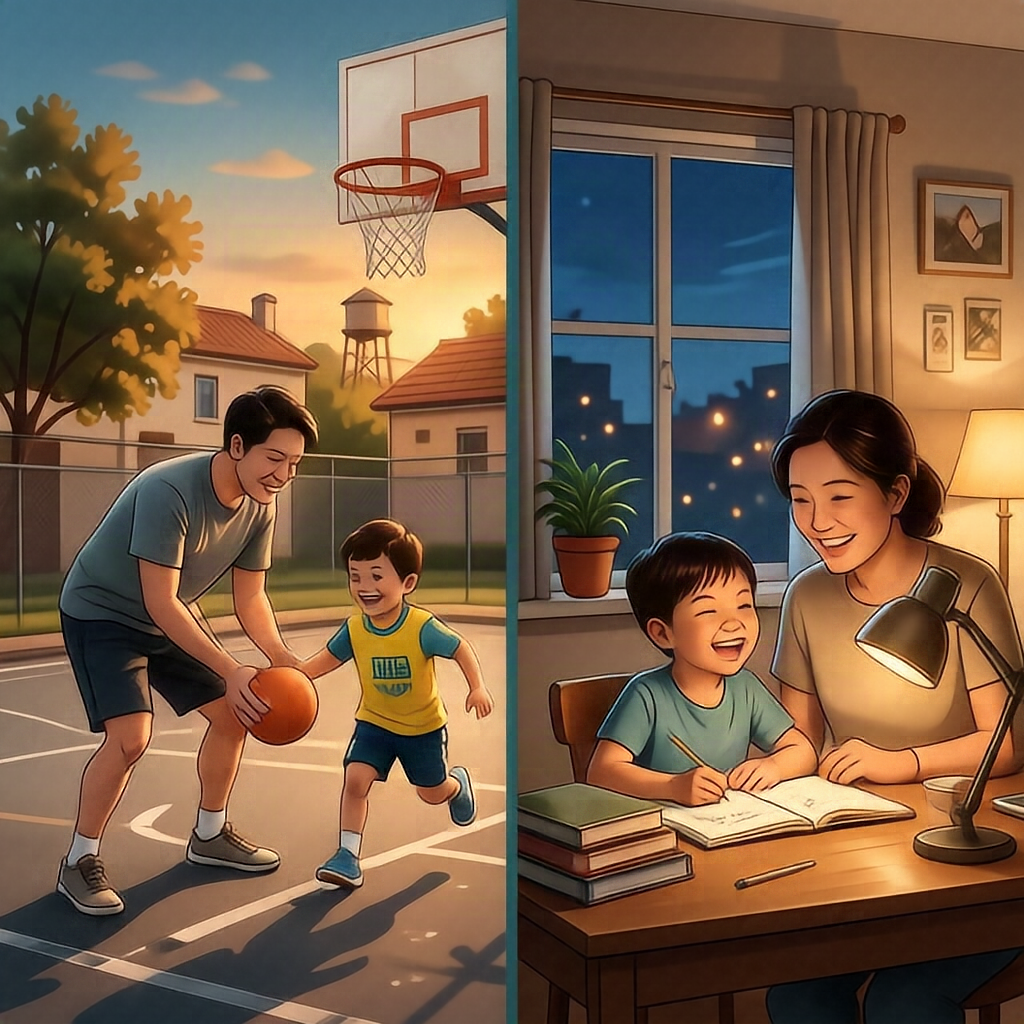 Published Highsfield visual reference: Illustrated family scenes in warm indoor and outdoor light.
The published image shows two illustrated family scenes with different activities. It is useful for studying separating related moments into distinct compositions rather than combining every action in one frame. A still establishes appearance, while movement needs its own brief. Use that distinction when planning the proposed scene. This is a reference from the public site, not a newly generated result or proof of Seedance 2.5 performance.
Published doorway-portrait gemini ai video example from Highsfield. Open the published video example.
The video poster shows a person visible through a narrow doorway opening. Open the clip to study how framing can establish a focal point before movement begins, then judge the moving result rather than inferring it from the poster. Its use here is as a visual reference; this article does not attribute the clip to Seedance 2.5. Compare the opening and ending before borrowing a camera idea. The proposed project remains a separate, hypothetical exercise.
Check the Clip Against the Actual Assignment
For this particular concept, watch the boundary between the room and the exterior. Reject the draft if the rain appears indoors or furniture changes form. That is a visible requirement rather than a general preference for a polished look. If the mismatch appears in only part of the clip, identify that moment before changing the brief. An acceptable opening frame does not excuse a subject or environment that becomes inaccurate during the intended action.
Put the permitted reference beside the output when appearance matters. Memory is a weak guide to subtle changes in shape, spacing or color. For this exercise, watch the boundary between the room and the exterior. A direct comparison makes the acceptance decision more defensible. If the project needs factual product or location accuracy, separate that decision from a general judgment that the clip looks attractive. Visual appeal and accurate representation answer different questions.
Inspect the shot both alone and beside the next planned image. Camera direction can be clear in isolation but confusing when two shots disagree about subject position or travel. The neighboring shot is part of the camera review. For this exercise, keep the placement of the window geometry and warm interior light legible through the transition. If the sequence forces the viewer to reorient unnecessarily, a simpler shot or a different cut may serve the story better.
Take the Highsfield Draft Into the Final Edit
Audio should be a separate decision. Highsfield’s guidance distinguishes speech, ambience and music, and audio availability depends on the selected model’s controls. Do not assume a scene prompt automatically includes usable sound. If sound is supported, describe its role in the scene. If the project already has a recording or licensed track, the editing stage may be the clearer place to assemble and balance it.
After selecting a draft, view it with the intended caption and destination layout. The surrounding message can change what the visual appears to claim. Review the complete presentation rather than the clip in isolation. For reading room videos, test the chosen view in the intended crop and preserve the important detail through the edit. Keep the source and approval notes together so a later teammate can make a correction without repeating the entire creative exercise or inventing the meaning of an unfamiliar file.
The practical standard is simple to state even when it takes several drafts to reach: the audience should see the intended action and recognize the required subject details. For reading room videos, the window geometry and warm interior light is part of that standard. Highsfield’s Seedance 2.5 workflow can inform the brief, with current availability verified in the generator. Keep revisions tied to a visible problem. That habit makes the experiment easier to review, hand off and revisit when the project develops further.

